中国澳大利亚商会会长在北京峰会上阐述澳中经济合作新愿景
From Complementarity to Joint Capability: A New Vision for Bilateral Economic Cooperation
从优势互补到互能:为中澳经济合作擘画新愿景
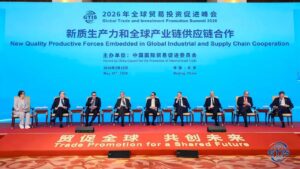
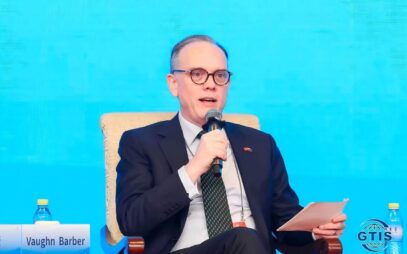
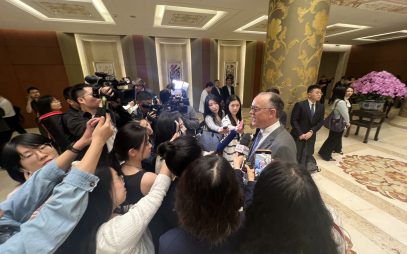
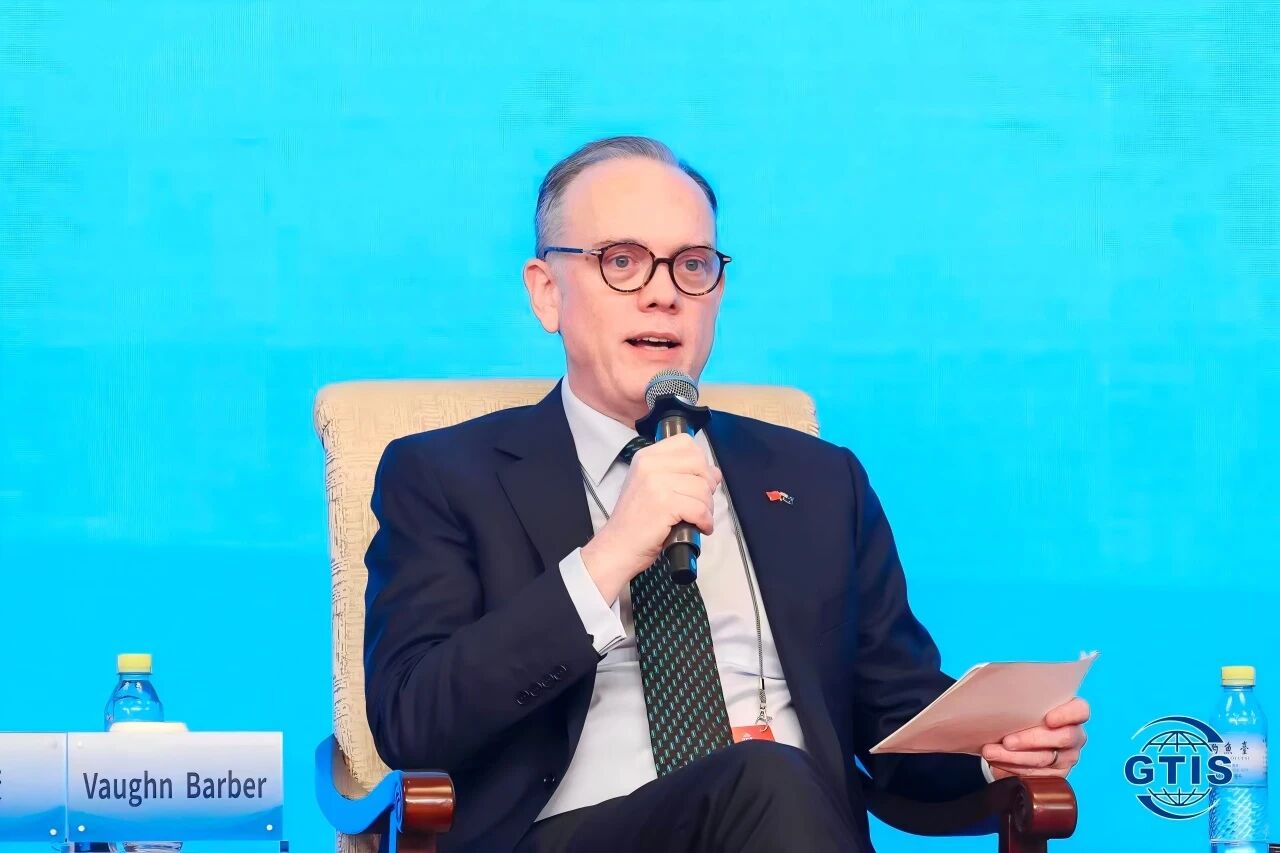
On 18 May 2026, AustCham China Chair Vaughn Barber participated as a panellist at the 2026 Global Trade and Investment Promotion Summit (GTIS) in Beijing, where he set out a forward-looking vision for the next phase of Australia-China economic cooperation.
2026年5月18日,中国澳大利亚商会会长冯栢文(Vaughn Barber)在京出席2026年全球贸易投资促进峰会(GTIS),并作为嘉宾参与全体会议讨论。他在会上阐述了对下一阶段澳中经济合作的前瞻性愿景。
The core of his message was a shift from the traditional framework of complementarity to one of “joint capability” — a concept he expressed in Chinese as “互能” (Huneng).
他发言的核心观点是,澳中合作应从传统的“优势互补”框架,转向“共同能力建设”——他将此概念表述为“互能”。
Why this vision matters now
为什么这一愿景很重要
Speaking on a panel about embedding new quality productive forces in global supply chains, Mr. Barber argued that the bilateral relationship can no longer be defined only by Australia supplying resources and China supplying manufacturing scale. The next phase should be about using each side’s strengths to build new capabilities in the other.
在关于“新质生产力如何嵌入全球供应链”的专题讨论中,冯栢文指出,双边关系不应再仅由“澳大利亚提供资源、中国提供制造规模”来定义。下一阶段的关键在于利用双方各自优势,相互赋能,共同建设新的能力。
He framed this as a practical response to shared policy challenges: how to create high-quality new-economy jobs, add more value to natural resources, and build stronger domestic industrial capability in both countries.
他将此视为应对共同政策挑战的务实方案:如何在两国创造高质量的新经济就业岗位、提升自然资源附加值,并建设更强大的本土产业能力。
“When ChAFTA entered into force just over ten years ago, the relationship was built on complementarity. That foundation still matters. But the next phase is about combining different strengths to create, deploy and scale new capabilities.”
“《中澳自贸协定》生效至今已逾十年,这段关系建立在优势互补的基础之上。这一基础依然重要,但下一阶段的关键在于将各方优势结合起来,共同创造、部署并规模化推广新能力。”
Reframing supply chain cooperation
重新定义供应链合作
Addressing Australia’s role as Guest Country of Honour at the China International Supply Chain Expo (CISCE), Mr. Barber reframed supply-chain cooperation as being about much more than the buying and selling of goods. It is, he argued, about how countries and companies position themselves within the networks that create and deploy economic capability.
在谈及澳大利亚担任中国国际供应链促进博览会(链博会)主宾国时,冯栢文对供应链合作的内涵作出重新阐释。他认为,供应链合作远不止于商品买卖——其核心在于国家和企业如何在创造和部署经济能力的网络中找准自身定位。
He noted a distinctive and growing opportunity: Australian companies increasingly have the chance to access China not only as a market for their exports, but as a source of world-class industrial solutions — technologies, manufacturing capability and deployment capacity that Australia needs to deliver its own domestic agenda.
他指出,一个独特且日益凸显的机遇正在出现:澳大利亚企业越来越有机会将中国视为获取世界级工业解决方案的来源,而不仅仅是出口目的地——这包括澳大利亚推进国内议程所需的技术、制造能力和部署能力。
To illustrate this, he pointed to the Woodside Scarborough project: a 70,000-tonne floating production unit built in China and towed 4,000 nautical miles to Australia, combining world-class safety with significant cost efficiency. This, he argued, is what becomes possible when Australian companies approach China as a source of industrial capability.
他以澳德赛能源斯嘉堡项目为例:一台重达7万吨的浮式生产装置在中国建造,跨越4000海里抵达澳大利亚,将世界级安全标准与显著的成本优势融为一体。他指出,这正是澳大利亚企业将中国视为工业能力来源所能实现的可能性。
A direct message on investment clarity
关于投资透明度的直接表态
Mr. Barber addressed the significant decline in Chinese investment into Australia, noting it had fallen to historically low levels at a time when Australia is seeking to lift productivity and accelerate its energy transition. He framed this as a practical call for greater clarity and predictability in how the national interest framework is applied.
冯栢文也直接谈到中国对澳投资大幅下降的问题。他指出,中国对澳投资已降至历史低位,而这恰恰发生在澳大利亚希望提升生产率、加快能源转型的关键时期。他呼吁,澳大利亚在适用国家利益审查框架时应更加清晰、可预期。
“The issue is not investment screening itself. The harder issue is clarity and predictability in how the framework applies in practice — especially where proposals involve technology, data, systems access or critical infrastructure interfaces. Investors need clearer guidance on what risks are manageable, what safeguards are expected, and how minority stakes, joint ventures, governance arrangements and technology protections should be structured.”
“问题不在于投资审查制度本身。真正更难的问题在于,这一框架在实践中如何清晰、可预期地适用于涉及技术、数据、系统接入或关键基础设施接口的投资安排。投资者需要更明确地了解哪些风险可以通过措施管理、需要哪些保障机制,以及少数股权、合资安排、治理结构和技术保护应如何设计。”
This clarity, he argued, would help credible Chinese companies structure proposals with confidence, bringing not only capital but also technology and industrial know-how, which is essential to realising the broader “互能” agenda.
他认为,这种清晰性将有助于有实力、守规则的中国企业更有信心地设计投资方案,带来不仅是资本、还包括技术和产业经验——这对实现更广义的“互能”议程至关重要。
China as a source, not just a destination
中国:不只是目的地,更是能力来源
Mr. Barber concluded that Australia needs to think about China in two directions simultaneously: as a market for what Australia produces, and as a source of the capabilities Australia needs to produce more, and produce better.
冯栢文总结道,澳大利亚需要从两个方向同时审视中国:既是澳大利亚产品的市场,也是澳大利亚提升产能、优化产品所需能力的来源。
He emphasised that this engagement should be risk-based rather than based on automatic exclusion, and that the response to technology risk should be appropriate safeguards, local capability-building and trusted partnerships — not blanket disengagement.
他强调,此类合作应以风险评估为基础,而非一律排斥。应对技术风险的正确方式,是建立适当的保障机制、培育本地能力、构建可信赖的伙伴关系——而非全面脱钩。
Looking ahead
展望未来
Mr. Barber closed with a reflection on the next decade of the relationship, should both sides be willing to move beyond the old frameworks:
冯栢文以一段展望作为发言收尾,若双方愿意超越过去的框架,未来十年将意味着:
“Global supply-chain cooperation is no longer only about efficiency — and it is not only about security. The real challenge is to build supply chains that are resilient, innovative, sustainable and commercially viable — all at the same time. If we get that right, the next ten years of Australia-China economic cooperation will not be defined only by what we sell to each other — but by what we build together.”
“全球供应链合作已不再只关乎效率,也不只关乎安全。真正的挑战在于:同时构建具有韧性、富有创新力、可持续且具备商业可行性的供应链。若能做到这一点,未来十年的澳中经济合作将不仅由我们相互出售什么来定义,更由我们共同建设什么来书写。”
The summit, hosted by the China Council for the Promotion of International Trade (CCPIT), brought together senior officials and business leaders from around the world under the theme “Advancing Through Innovation, Connecting the Future.”
本次峰会由中国国际贸易促进委员会(贸促会)主办,以“向新而行,链接未来”为主题,汇聚了来自全球的政府高级官员及商界领袖。